

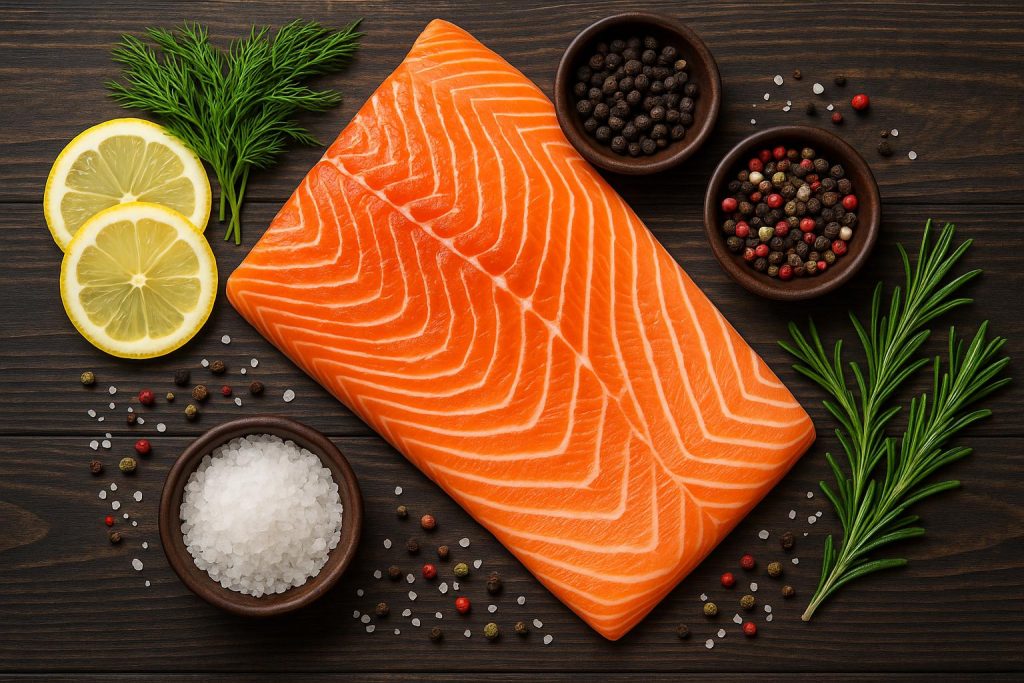
The Anatomy of Salmon
Salmon is an anadromous fish, meaning it is born in freshwater, migrates to the ocean, and returns to freshwater to spawn. Therefore, understanding the life of a salmon requires knowledge of both freshwater and marine environments, as each phase of their life is intricately linked to these water bodies. This species exhibits a multitude of colors, shapes, and sizes, depending on its life stage and environment. These features not only help them adapt to different stages of life but also assist humans in identifying various species of salmon.
Physical Characteristics
The physical characteristics of salmon play a crucial role in their survival and migration. Salmon have a streamlined body that aids in their long-distance migrations. This streamlined shape reduces water resistance as they travel. Their coloration, which can range from silver to a deep reddish hue, often changes during spawning. Such variations in color are influenced by factors like diet, age, and hormonal changes, offering salmon protection through camouflage and aiding in their reproductive behavior.
Anatomically, notable features include their forked tail, which provides powerful thrusts necessary for swimming in strong currents. The pointed snout is another critical feature, aiding in the search for food and navigation. Additionally, their distinctive patterns and spots serve as identifiers that help in distinguishing between different species. These marks are often used by researchers and anglers for species identification.
Species Diversity
Salmon are a testament to biodiversity in aquatic systems, with multiple species identified across various global regions. The most common salmon species are the Atlantic salmon (Salmo salar) and the five Pacific salmon species: Chinook, Coho, Pink, Chum, and Sockeye. Each species embodies unique adaptations that suit their specific environments and challenges.
Chinook salmon, known for their significant size and strength, are often found in larger river systems. Coho salmon display incredible jumping ability, allowing them to navigate obstacles like waterfalls. Pink salmon, the smallest of the Pacific species, complete their life cycle rapidly, typically within two years. Chum salmon boast the widest global distribution, while Sockeye salmon are renowned for their intense red coloration during spawning. Each of these species has distinct habits and habitats, which further illustrate the variety found within the salmon genus. Exploration of these differences can enhance our understanding of how diverse ecological demands shape evolution and adaptation.
Salmon Life Cycle
The life cycle of salmon illustrates a fascinating journey through diverse ecological zones, with each stage playing a vital role in their development and survival. Their journey is cyclical, with a pattern that repeats through countless generations.
Spawning
The spawning phase showcases one of the most extraordinary biological feats in nature. Salmon return to their natal stream to spawn. This homing behavior is a remarkable example of animal migration, allowing salmon to locate the same spawning grounds from which they emerged years before. This journey is treacherous and relies on the salmon’s incredible homing instinct. Survival during this phase becomes an exceptional challenge, with predators and environmental barriers presenting constant threats.
Spawning occurs in gravel beds with suitable water flow, which provides oxygen to the developing eggs. These specific conditions offer protection and nourishment, ensuring the next generation of salmon has the best possible start to life. The choice of spawning sites is often influenced by water temperature, oxygen availability, and substrate quality.
Developmental Stages
The salmon’s life progresses through distinct developmental stages, each with its own challenges and requirements:
– Eggs are laid in a gravel nest known as a redd, where they will remain safely anchored against environmental threats.
– Alevins hatch from these eggs, initially staying in the safety of the gravel beds, feeding off their yolk sac for nourishment. This phase is critical as it determines initial survival levels.
– As a fry, the young salmon emerge from the gravel and begin to actively feed and grow. This stage involves acclimatization to living conditions and avoiding predators.
– Smolts undergo physiological changes to adapt to saltwater environments before migrating to the ocean. This transition is pivotal as they prepare for life in marine waters.
– Adults mature in the ocean, spending several years growing before returning to freshwater to spawn and renew the cycle of life.
Ecological Importance
Salmon play an invaluable role within their ecosystems, bridging the gap between aquatic and terrestrial environments. They act as nutrient vectors, transporting marine nutrients to freshwater ecosystems through their migration cycle. This transfer occurs as marine-derived nutrients make their way into freshwater bodies and terrestrial surroundings when salmon spawn and decompose post-spawning.
Their bodies, post-spawning, enrich the soil and provide food for a variety of wildlife. In this way, salmon contribute to the food web by sustaining terrestrial species like bears, birds, and insects. The nutrients they carry promote vegetation growth along stream banks, supporting greater biodiversity.
Conservation Status
Despite their ecological significance, salmon populations face numerous threats that jeopardize their survival and, by extension, the health of ecosystems they support. Various factors, such as overfishing, habitat destruction, and climate change, threaten salmon populations. These challenges stem from human activities and environmental changes, reflecting the delicate balance within ecosystems.
To protect these vital species, numerous conservation efforts are in place, including the restoration of habitats and sustainable fishing practices. Research initiatives focus on understanding salmon ecology to enhance conservation strategies. Information on ongoing conservation projects can be explored further on sites like the NOAA Fisheries.
Conclusion
Salmon are pivotal both ecologically and economically, supporting not only ecosystems but also communities that depend on them for sustenance and economic activities. The remarkable life cycle of salmon mirrors the complexity and resilience of nature. Their intricate life cycle and the challenges they face underscore the importance of continued research and conservation efforts. Addressing these challenges is crucial for maintaining the biodiversity and health of global aquatic ecosystems, ensuring future generations can continue to witness and benefit from the wonder of salmon migrations.
